Spinel vs Ruby: The Same Red, Two Different Stones
How to tell them apart, why one is almost always heated and the other rarely treated, which holds up better in a ring, and why the price gap is so wide.

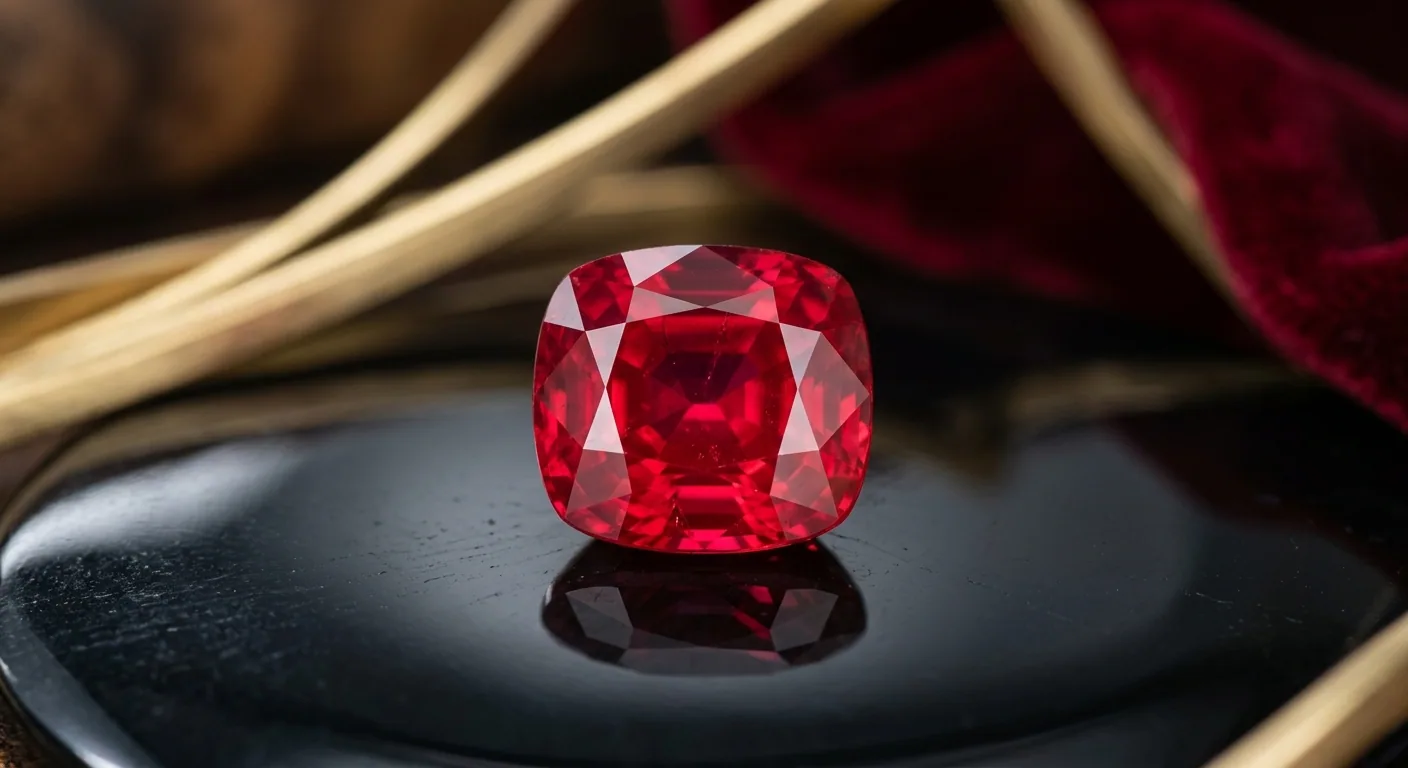
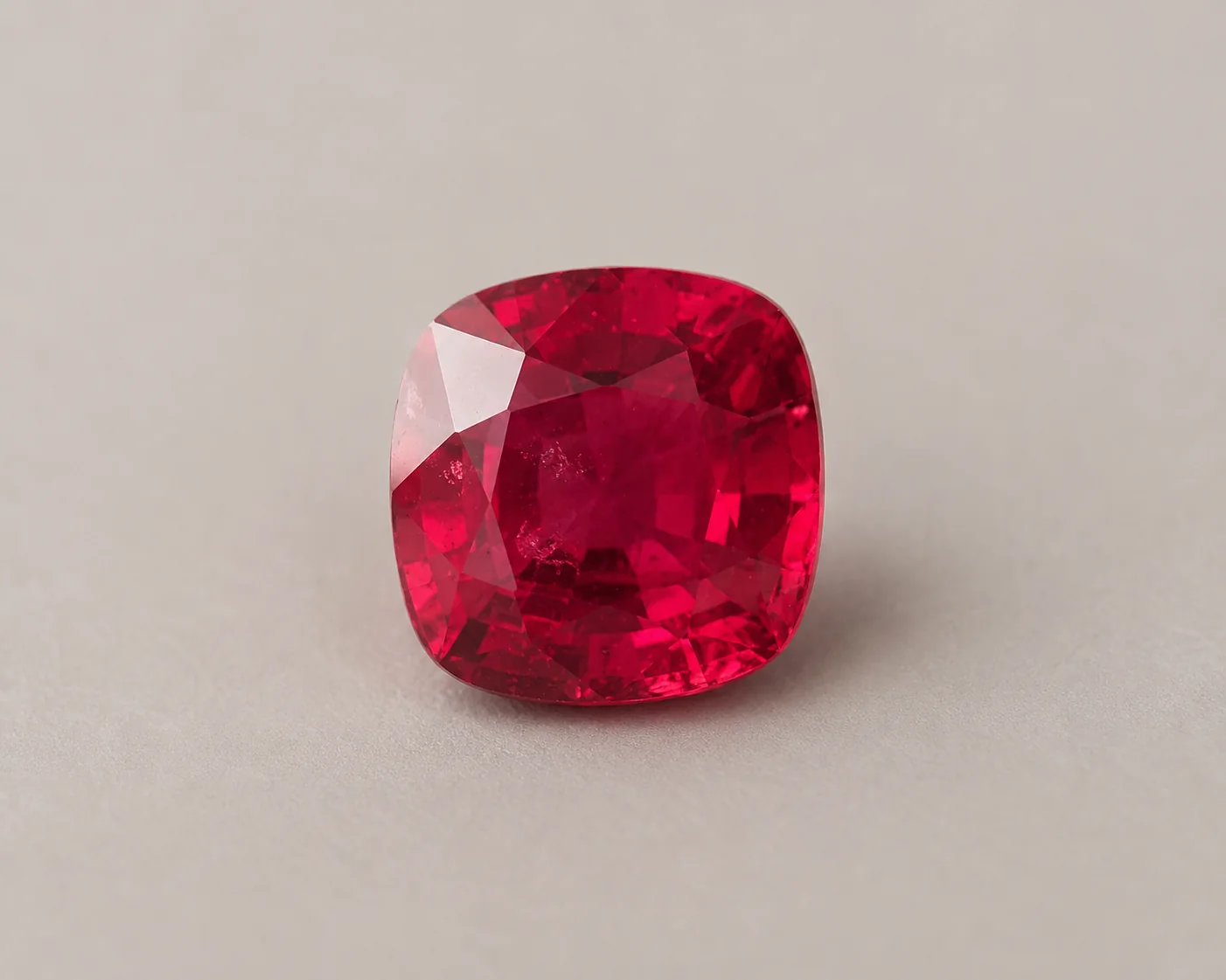
Spinel and ruby can wear the same red, and by eye you often cannot tell which one is in your ring. They are two different stones. Ruby is corundum, rated 9 for hardness and almost always heated. Spinel rates 8, still a very good ring stone, and is rarely treated. At the top, a 5-carat red spinel might sell for around a tenth of an equivalent ruby. A laboratory tells them apart.
| Ruby | Red spinel | |
|---|---|---|
| Mineral | Corundum | Spinel |
| Hardness (Mohs) | 9 | 8 |
| Treatment | Almost always heated | Rarely treated |
| Turned under a dichroscope | Two reds | One red |
| Price, top 5 ct | The benchmark | Around a tenth |
Why Were Spinel and Ruby Confused for Centuries?
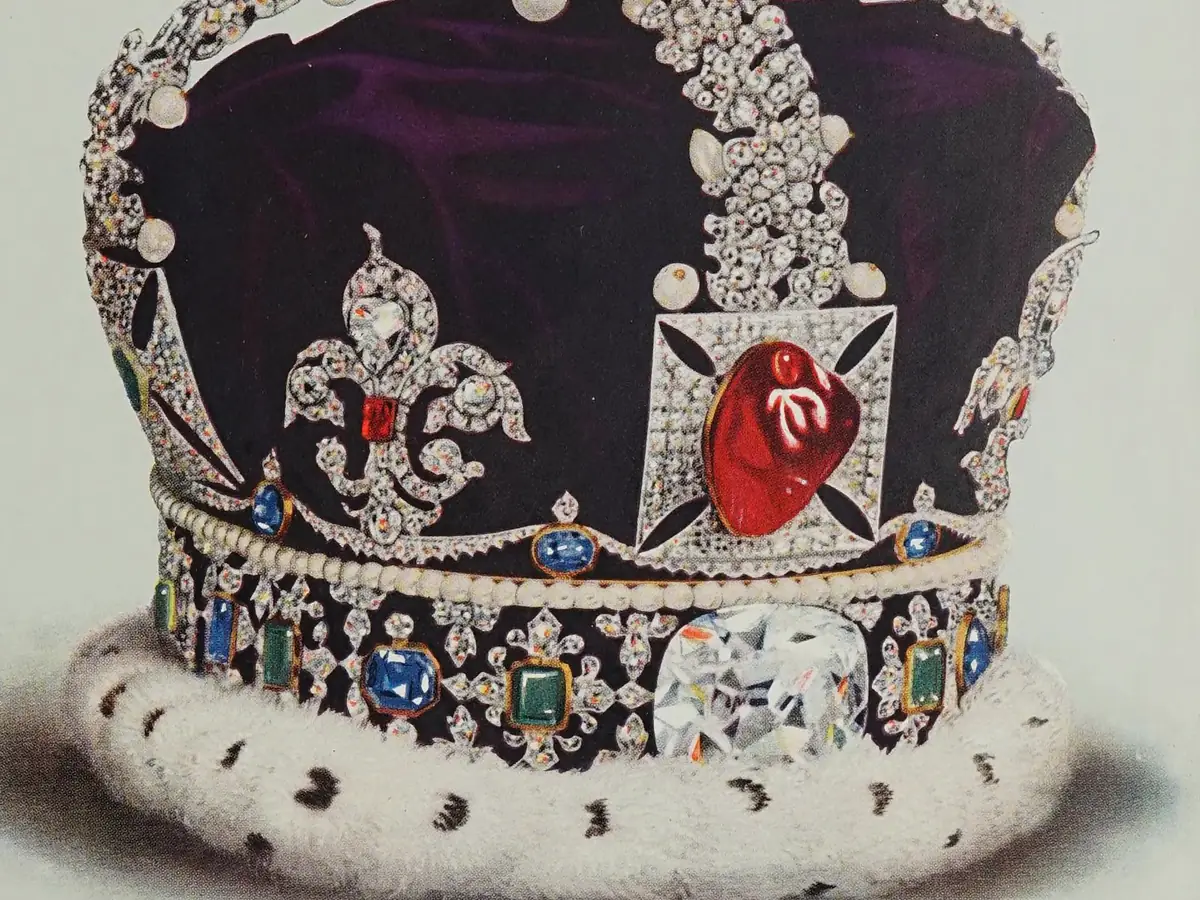
Because they share a red, and often a mine. Chromium colors both. Red spinel often grows in or near ruby deposits, as in Mogok, in Myanmar, home to the world’s finest rubies. For centuries the two were taken for one another, and red spinel still carries an old misnomer, “balas ruby”. Some of the most famous rubies in royal jewels are, in fact, spinels.
Can You Tell Spinel From Ruby by Eye?
Rarely. A fine red spinel and a ruby can look the same. What separates them is what each one does with light.
- Turn it. Ruby is doubly refractive: seen from different directions, it shows two reds, one orangy, one slightly purplish. Spinel is singly refractive and stays one red. A dichroscope makes the difference visible.
- Read the index. On a refractometer, spinel reads about 1.72, ruby 1.76 to 1.77.
- Read the spectrum. Red spinel shows a tight group of chromium lines in the red that helps tell it from ruby.
Try it
Two reds or one?
Two red stones seen through a dichroscope: one spinel, one ruby. The instrument shows each stone in two small windows side by side.
Pick a position and compare the two windows of each stone.
Stone A
One redTwo redsTwo reds, switched sides
Stone B
One redTwo redsTwo reds, switched sides
Turned 90°, the two colors of a ruby switch sides: that confirms it is pleochroic.
Seen down its optic axis, a ruby shows one red too. Look in at least three directions before you conclude.
Which one is the ruby?
- Spinel, singly refractive: the same red in both windows
- Ruby, doubly refractive: an orangy red and a slightly purplish red
- The same ruby, dichroscope turned 90°: the two reds switch sides
- The same ruby seen down its optic axis: one red
Ruby is doubly refractive: seen from different directions, it shows two reds, one orangy, one slightly purplish. Spinel is singly refractive and stays one red.
Turned 90°, the two colors of a ruby switch sides: that confirms it is pleochroic.
Two traps
- Seen down its optic axis, a ruby shows one red too. Look in at least three directions before you conclude.
- One red does not prove spinel: a red garnet, singly refractive too, also shows one red.
A dichroscope tells two reds from one. It does not name the stone: a laboratory does.
Drawn, not photographed: the two reds show the idea, they are not measured colors, and these are not stones from our stock.
On a stone that matters to you, the answer is written on a report from an independent laboratory: what a lab report proves.
Is the Red Natural? Heated Ruby, Untreated Spinel
This is where the two part ways. Almost every ruby on the market today has been heated, to develop or intensify its red, and sometimes to make inclusions less visible. Heating is so widespread that, even when it cannot be detected, it is assumed. Some rubies go further, with cavities filled with glass or fractures filled with oil or resin.
Spinel is rarely treated: the red you see is, in all likelihood, the red it came out of the ground with. With spinel, the question is natural or lab-grown. A flux-grown red synthetic has been made since the 1990s, and a laboratory separates it from natural spinel by its inclusions, under magnification. For ruby, see how a natural ruby is judged.
Which Holds Up Better in an Everyday Ring?
Ruby, by one step, and both are very good. Ruby rates 9, harder than any natural gem except diamond, and its toughness is usually excellent, unless treatments or large fractures weaken it. Spinel rates 8, with good toughness, and suits daily wear in any jewel. Most dust is quartz, at 7, so both keep their polish on a hand that never takes them off.
Spinel or ruby in a ring: hardness and toughness
Hardness is resistance to scratches, toughness is resistance to knocks. A ring needs both. Tap a stone.
Touch a point to read about the stone.
Diamond Mohs 10 · Toughness: Good in its cleavage directions, exceptional in all others
10 on the Mohs scale, harder than any other gem. A hard knock at the wrong angle can still chip it.
Ruby Mohs 9 · Toughness: Usually excellent
9 on the Mohs scale, harder than any natural gem except diamond; toughness usually excellent, unless treatments or large fractures weaken it. A filled ruby never goes into an ultrasonic or steam cleaner.
Red spinel Mohs 8 · Toughness: Good
8 on the Mohs scale with good toughness: a very good ring stone, suited to daily wear in any jewel. Ultrasonic and steam cleaners are usually safe for it.
Quartz (dust) Mohs 7 · Toughness: Good
7 on the Mohs scale. Most dust in the air is quartz: a stone below it slowly dulls in wear and cleaning. Spinel and ruby both sit above it, so both keep their polish.
| Stone | Mohs | Toughness |
|---|---|---|
| 1Diamond10 on the Mohs scale, harder than any other gem. A hard knock at the wrong angle can still chip it. | 10 | Good in its cleavage directions, exceptional in all others |
| 2Ruby9 on the Mohs scale, harder than any natural gem except diamond; toughness usually excellent, unless treatments or large fractures weaken it. A filled ruby never goes into an ultrasonic or steam cleaner. | 9 | Usually excellent |
| 3Red spinel8 on the Mohs scale with good toughness: a very good ring stone, suited to daily wear in any jewel. Ultrasonic and steam cleaners are usually safe for it. | 8 | Good |
| 4Quartz (dust)7 on the Mohs scale. Most dust in the air is quartz: a stone below it slowly dulls in wear and cleaning. Spinel and ruby both sit above it, so both keep their polish. | 7 | Good |
Points that would overlap are moved apart a little. The exact values are in the table.
Toughness has no number: it is rated in words, and one stone can sit on two lines. Inclusions, fractures or some treatments lower it for any single stone.
Source: Hardness and toughness as published in standard gemology references, checked on 26 November 2026.
One detail matters at the jeweler’s bench. A ruby with filled cavities or fractures dislikes heat and chemicals, and should never go into an ultrasonic or steam cleaner. Spinel usually takes both. Say which stone it is before any repair or resizing.
Why Does Ruby Cost So Much More Than Spinel?
Fame, more than beauty. Ruby is the best-known red gem in the world, while many buyers do not know a natural spinel exists. Yet the finest red spinels can rival fine ruby, and a top 5-carat red spinel might sell for around a tenth of an equivalent ruby.
Both grow scarce in large sizes. Above 5 carats, fine red spinel gets hard to find and its price rises sharply; large, fine rubies are extremely rare. Asking prices by size: red spinel per carat, spinel in other colors and ruby per carat.
Spinel or Ruby: Which Should You Choose?
- Choose ruby if the name matters to you, if you want the hardest red for a ring you never remove, and if a heated stone, declared as such, suits you. See what “pigeon blood” means and ruby engagement rings.
- Choose red spinel if the red itself comes first, if you want a stone that has very likely never been treated, and more quality for the same budget. Start with red spinel and the spinel guide.
Another red that is often mistaken for ruby: ruby vs garnet.
Quick answers
Is spinel a fake ruby?
Which famous rubies are actually spinels?
Does spinel glow under UV light like ruby?
Where are spinel and ruby found together?
Same red, two stones: let the report name yours
If the name ruby matters most, choose ruby, very likely heated and declared as such. If the red matters most, a fine red spinel can give you the same color, rarely treated, for a fraction of the price. Either way, the laboratory report names the stone.