June Birthstone and Birth Flower: Pearl, Alexandrite & Moonstone (2026)
A sourcer's guide to June's three birthstones and two birth flowers: what each one means, what it costs, and how to choose a gift you will not overpay for.
June Birthstone and Birth Flower: Quick Answer
| Symbol | June's answer | Meaning |
|---|---|---|
| Birthstones | Pearl, Alexandrite, Moonstone | Purity, fortune, intuition |
| Birth flowers | Rose, Honeysuckle | Love, devotion |
| Zodiac | Gemini and Cancer | May 21 to July 22 |
| Price range | $30 to $70,000+/ct | Pearl and moonstone low, alexandrite high |
Introduction
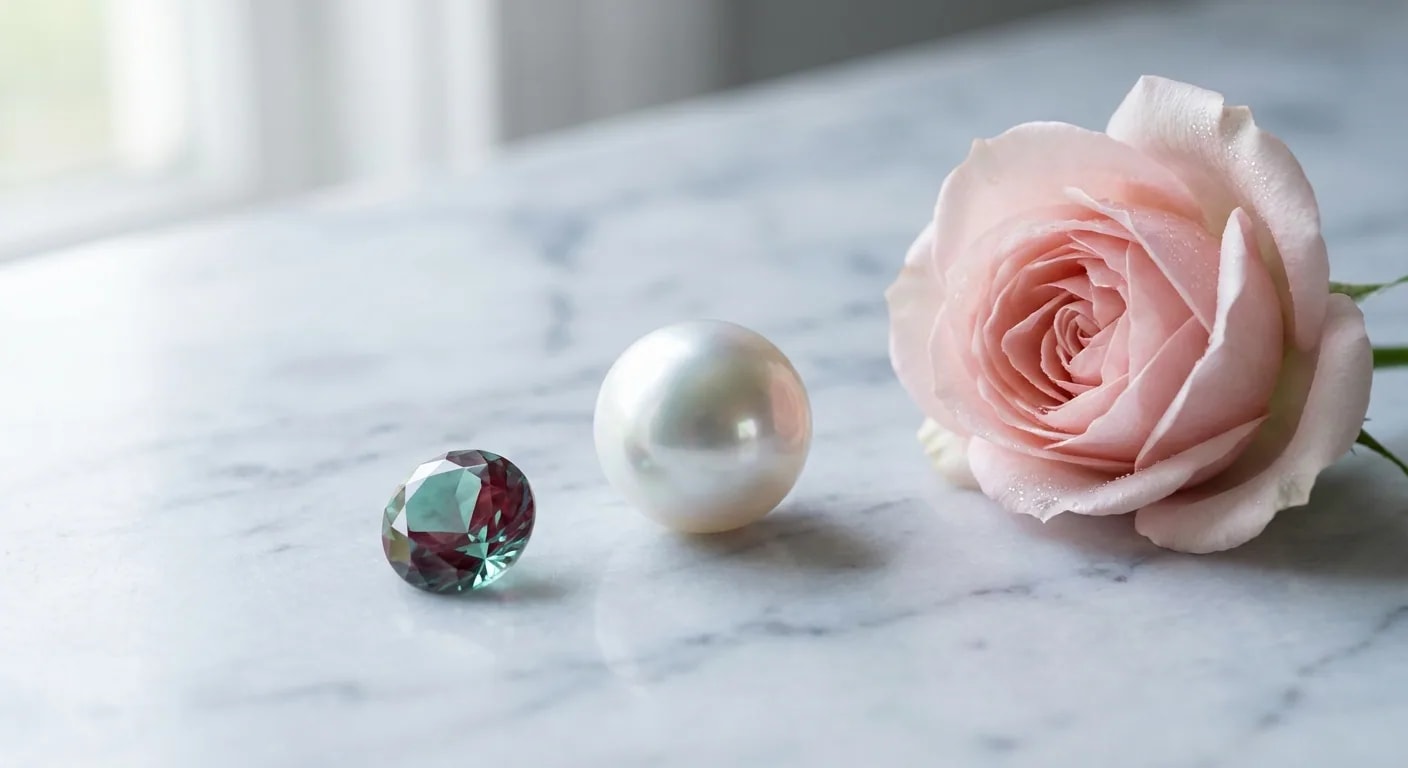
June is one of only three months with more than one birthstone, and the only month that also pairs its stones with two birth flowers. The three stones are pearl, alexandrite, and moonstone. The two flowers are the rose and the honeysuckle.
For gift-giving, that abundance is a gift in itself. A June birthday gives you more to work with than almost any other month, across every budget: from a freshwater pearl you can buy for the price of a nice dinner, to a color-change alexandrite that runs into the tens of thousands per carat. This guide walks through all of it, what each symbol means, what each stone actually is, and how to choose without overpaying. Updated March 2026.

June Birthstone: All About Alexandrite
The Three June Birthstones: Pearl, Alexandrite, and Moonstone
June's three birthstones could not be more different from one another. One is organic, one is a color-change rarity, one glows with an inner light. Here is what each stone actually is, so you can match it to the person and the price.
Pearl: June's Traditional Birthstone
Pearl is the oldest and most traditional of the three. It is the only June birthstone that is organic, grown inside a mollusk rather than mined from rock, built up layer by layer as nacre (per GIA). That soft origin comes with a trade-off: pearl sits at just 2.5 to 4.5 on the Mohs hardness scale (per GIA), which makes it the softest common gem you can buy. It scratches, and acids and perfume dull its luster, so a pearl wants gentle wear.
Symbolically, pearl reads as purity, wisdom, and quiet strength, the calm that comes from weathering something. On price, freshwater pearl starts around $30 and stays friendly; a good Akoya strand runs $300 to $5,000; South Sea and Tahitian pearls climb past $10,000. A quick honesty note: skip dyed freshwater pearl sold as a "rare natural color."
Alexandrite: The Color-Change Rarity
Alexandrite is the show-stopper. It is a rare variety of chrysoberyl that reads green or bluish-green in daylight, then flips to red or purplish-red under lamplight, a phenomenon GIA calls the alexandrite effect, often described as "emerald by day, ruby by night." It was first found in Russia's Ural Mountains in 1830 and named after the young Czar Alexander II (per GIA).
It is also the toughest and hardest June stone at 8.5 on the Mohs scale (per GIA), so it handles daily wear far better than pearl or moonstone. Fine natural alexandrite is rarer than diamond, and since the Russian mines are largely exhausted, Sri Lanka is now a primary source, where the gems are recovered as water-worn pebbles from alluvial gravels (per GIA). Prices reflect that scarcity: commercial color-change material starts around $500 to $2,000 per carat, while fine natural stones above one carat with a strong, clean change reach $15,000 to $70,000+ per carat. Lab-grown alexandrite gives you the color change honestly, at a small fraction of the price. We put the two side by side in our guide to telling natural alexandrite from lab-grown, including the inclusions each growth method leaves behind.
Moonstone: The Gem That Glows
Moonstone is the gentle one. It is a feldspar, one of the families the trade files as semi-precious, known for adularescence, that soft blue-to-white light that seems to float just under the surface and roll as you tilt the stone (per GIA). The best examples show a clean blue sheen over a near-colorless, transparent body. Rainbow moonstone, technically a labradorite, adds flashes of color.
It sits at 6 to 6.5 on the Mohs scale, but its real weakness is toughness: moonstone has distinct cleavage and is fairly fragile, so protective settings help (per GIA). Meaning-wise it is tied to intuition, calm, and new beginnings. It is also the most affordable of the three, typically $10 to $100 per carat for jewelry-grade material, with the finest blue-sheen stones reaching a few hundred. Watch for glass and plastic imitations sold as moonstone; ask whether it is genuine feldspar (adularia).
June's Three Birthstones at a Glance
| Stone | What it is | Hardness (Mohs) | Meaning | Typical price |
|---|---|---|---|---|
| Pearl | Organic, grown in a mollusk | 2.5 to 4.5 | Purity, wisdom | $30 to $10,000+ |
| Alexandrite | Color-change chrysoberyl | 8.5 | Fortune, transformation | $500 to $70,000+/ct |
| Moonstone | Feldspar with adularescence | 6 to 6.5 | Intuition, calm | $10 to $100+/ct |
If you want daily-wear durability, alexandrite wins easily. If budget leads, moonstone or freshwater pearl both look lovely for very little. We keep loose alexandrite and moonstone on hand from our own Sri Lankan sourcing.
June's Birth Flowers: Rose and Honeysuckle
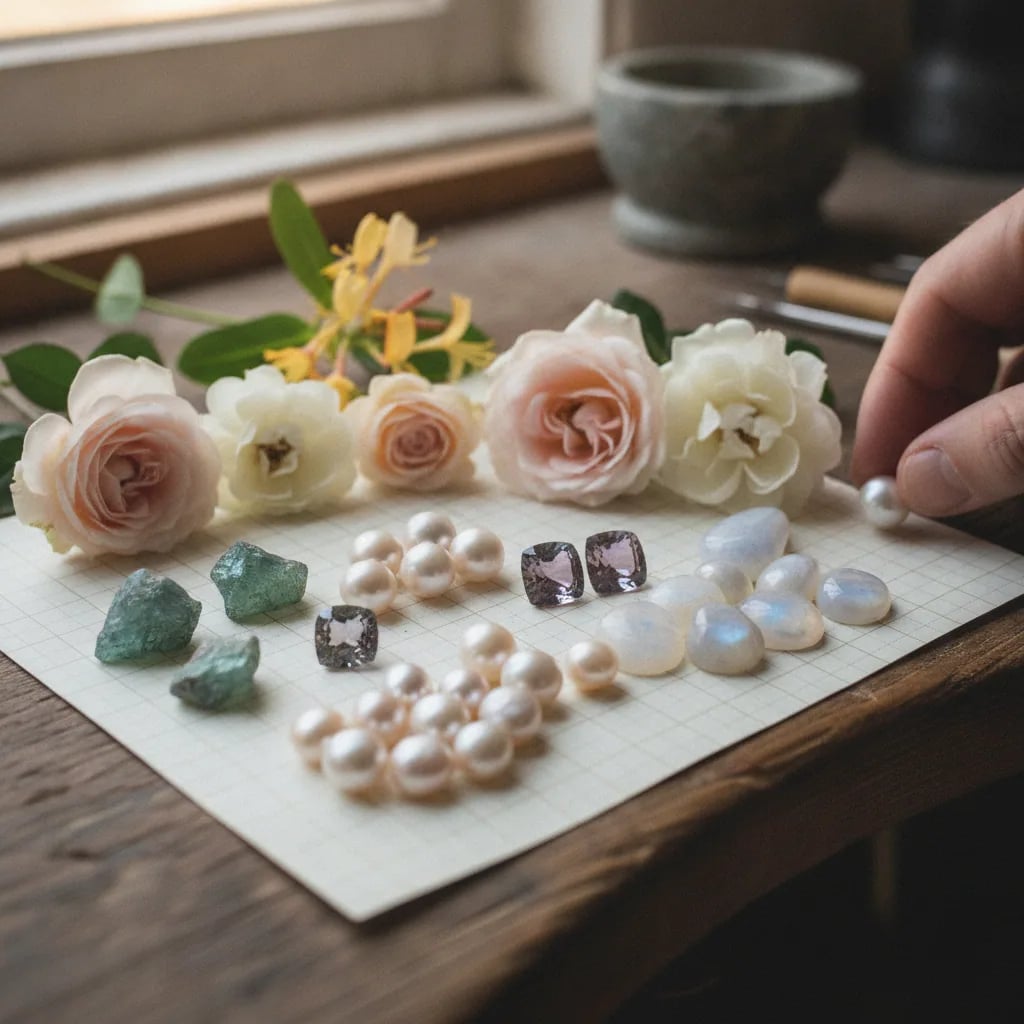
Rose and honeysuckle are June's birth flowers, and each carries a distinct meaning that pairs naturally with one of the stones.
Rose: The Classic Choice
The rose's symbolism is universal: love, beauty, passion. Its exact message shifts by color, the old "language of flowers." A red rose says passionate love, and if you want a stone in that spirit, a red garnet or a ruby carries the same fire. Pink rose leans toward gratitude and admiration, which suits pink tourmaline or pink sapphire. White rose points to purity and new beginnings, aligning cleanly with pearl, June's most traditional stone.
Honeysuckle: Devotion and Bonds
Honeysuckle stands for enduring bonds and devoted affection. Its trailing vine has been a jewelry motif for centuries, and its warm golden tones pair well with a golden citrine or yellow sapphire accent. For a June gift that tells a specific story, a honeysuckle motif around a moonstone center, devotion wrapped around gentle light, has real thought behind it.
What June's Stones and Flowers Mean Together
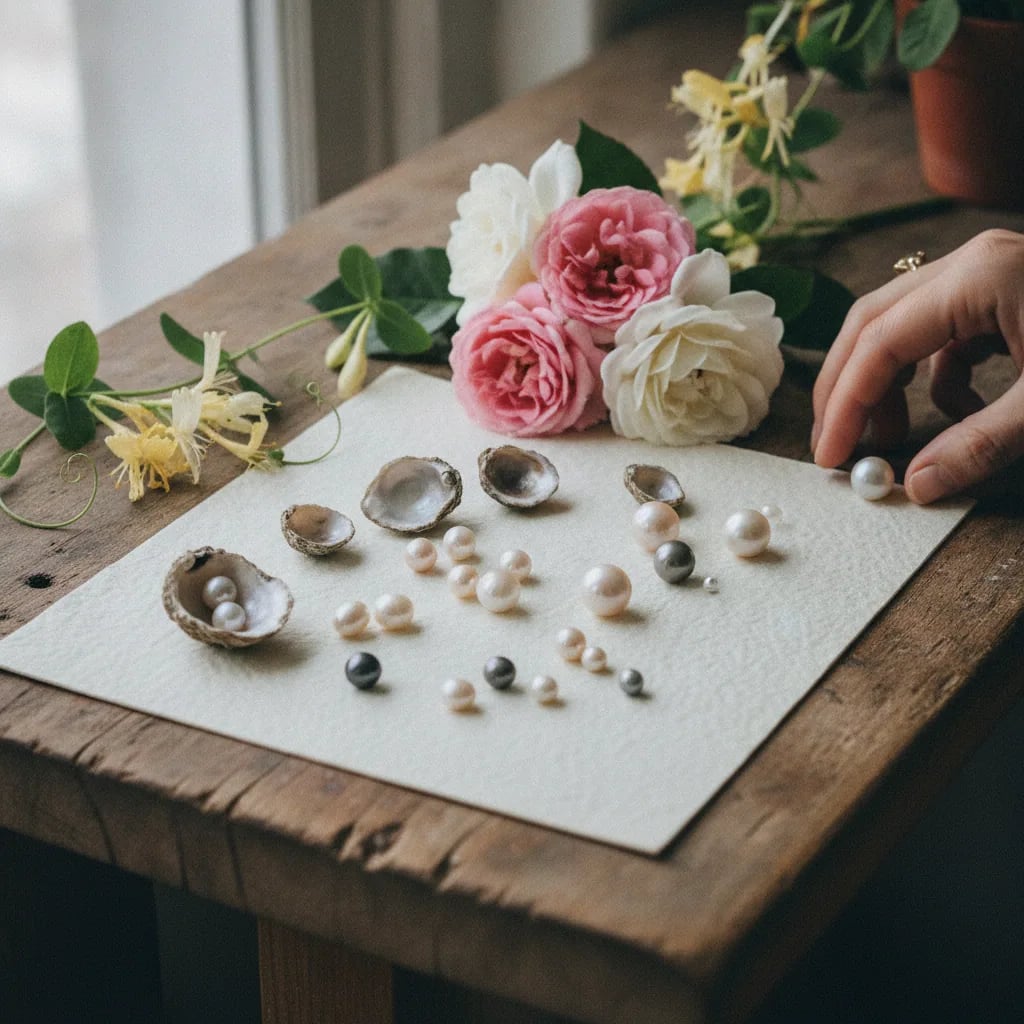
Pair a flower with a stone and you get a clearer message than either sends alone. Here are the three combinations worth knowing.
Rose + Pearl: Timeless Elegance
The most traditional June pairing. Pearl for wisdom and purity, rose for love and beauty; together they say "you are timeless." It works best as a simple pendant or a stud earring set. Freshwater pearl keeps it accessible; Akoya or South Sea pearl elevates it.
Rose + Alexandrite: One of a Kind
For someone exceptional. Alexandrite is rarer than fine diamond and changes color before your eyes; the rose adds passionate love. The message is simple: "you are one of a kind." A real natural stone lives in the $500 to $10,000+ bracket depending on size and the strength of the change.
Honeysuckle + Moonstone: Ethereal Connection
Moonstone's floating light and honeysuckle's trailing vine make a gift with an organic, almost dreamlike feel. It suits someone drawn to nature-inspired, non-traditional pieces, and it stays gentle on the wallet at $20 to $200 for lovely jewelry-grade material.
June Birthstone by Date and Zodiac: Gemini and Cancer
People often ask which June birthstone belongs to a specific date. The honest answer: all three stones apply to the whole month, June 1 through June 30. There is no official day-by-day assignment, so choose by the meaning or the budget that fits, not by the calendar square. For the full month-by-month picture, see our guide to all birthstones by month.
Zodiac is where the date matters. June is split between two signs. Gemini runs May 21 to June 20, and its twin, dual nature mirrors alexandrite's two faces beautifully. Cancer runs June 21 to July 22, and this water sign's emotional, intuitive character sits naturally with moonstone and pearl. So a gift given early in June often leans alexandrite for the Gemini; later in the month, moonstone or pearl for the Cancer.
| June dates | Zodiac sign | Best-matched stone |
|---|---|---|
| June 1 to June 20 | Gemini | Alexandrite (its duality) |
| June 21 to June 30 | Cancer | Moonstone or pearl |
Choosing a June Birthstone Gift, by Budget
June birthstone gifts genuinely work at every price point. Here is a practical breakdown, with the traps to avoid at each level.
Under $100: Freshwater Pearl or Moonstone
Freshwater pearl earrings or a simple moonstone pendant. Both look elegant, both are real gems with genuine gemological credentials. Avoid dyed pearl marketed as "rare color," and steer clear of glass sold as moonstone; ask for feldspar (adularia or labradorite) if you are unsure.
$100 to $500: Fine Pearl or Rainbow Moonstone
An Akoya strand or good studs, or a rainbow moonstone with strong adularescence. Small lab-grown alexandrite accents also land in this range. This is where stones start to have real visual presence.
$500 to $2,000: Real Alexandrite Begins
A natural alexandrite above 0.5 carat with a visible color change. This is where alexandrite becomes a serious gemstone rather than an accent chip. The target is a certified natural stone, and the report should read "natural alexandrite, color change."
$2,000 and Up: Fine Natural Alexandrite
A natural stone above one carat with a strong, clean change from teal-green to red-violet, certified by GIA or another respected lab. Buy it because the color change genuinely moves you and you plan to keep it, not as a bet on resale. A stone you love beats a "safe" line on a spreadsheet every time. Always get the certificate first.
Beyond Jewelry: Other June Birthday Tributes
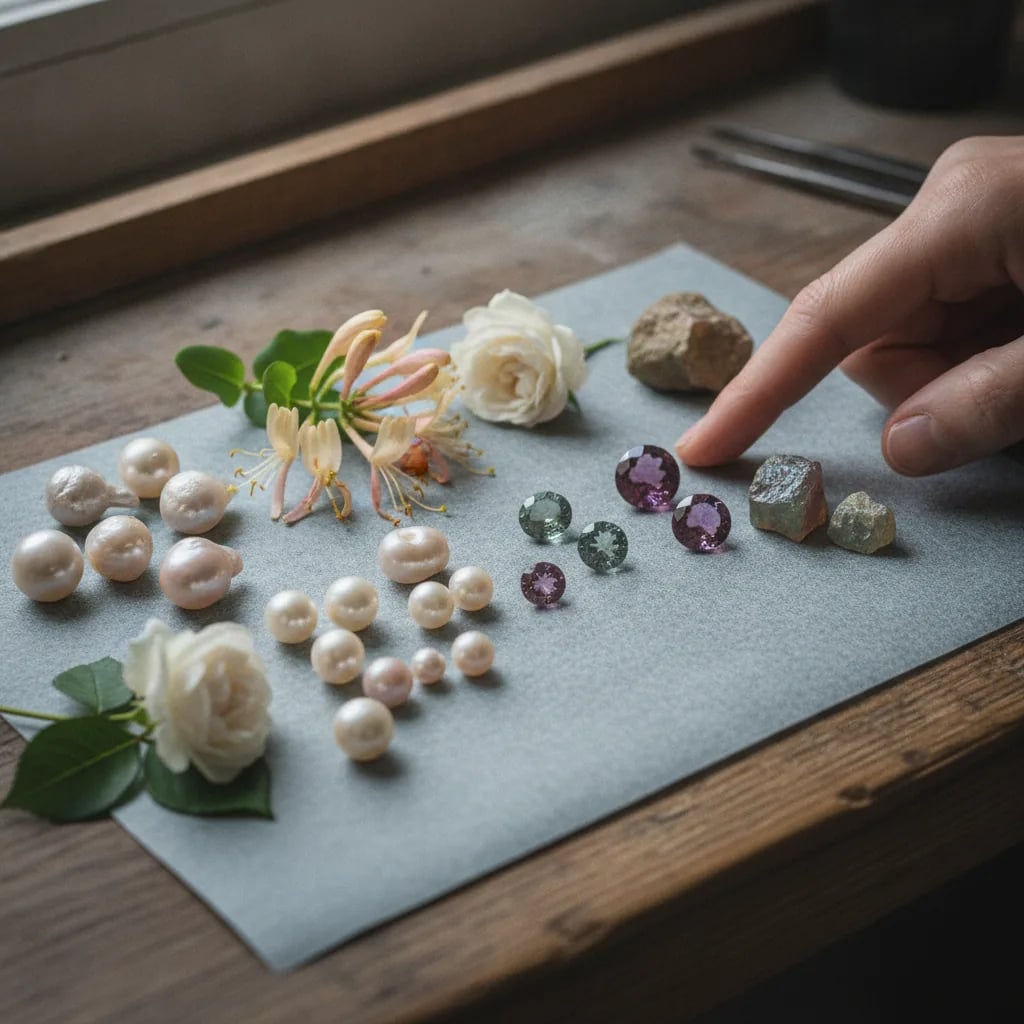
The June symbols translate into gifts well beyond a ring or pendant. A pressed rose from a meaningful day, set in resin beside a small pearl or moonstone. A custom illustration that combines the birth flowers and stones. A living arrangement with climbing honeysuckle and a gemstone tucked among the roots.
For the collector, a raw alexandrite crystal from Sri Lanka makes a display piece that is both beautiful and, frankly, hard to find. The thread across every June symbol is abundance and gentleness: three stones, two flowers, soft colors, organic shapes. Any gift built around that sensibility tends to land.
Frequently Asked Questions
Conclusion
June gives you more choice than almost any birth month: three stones and two flowers, from an affordable freshwater pearl to a color-change alexandrite few people ever see in person. Match the meaning to the person, the durability to how they will wear it, and the certificate to the price, and you cannot really go wrong. If you want a June stone that will still be sharp in fifty years, alexandrite is the durable pick; if budget and softness of light matter more, moonstone and pearl are lovely for very little. We source loose alexandrite and moonstone directly in Sri Lanka, so if you want to build a gift around a real, certified stone, start there.